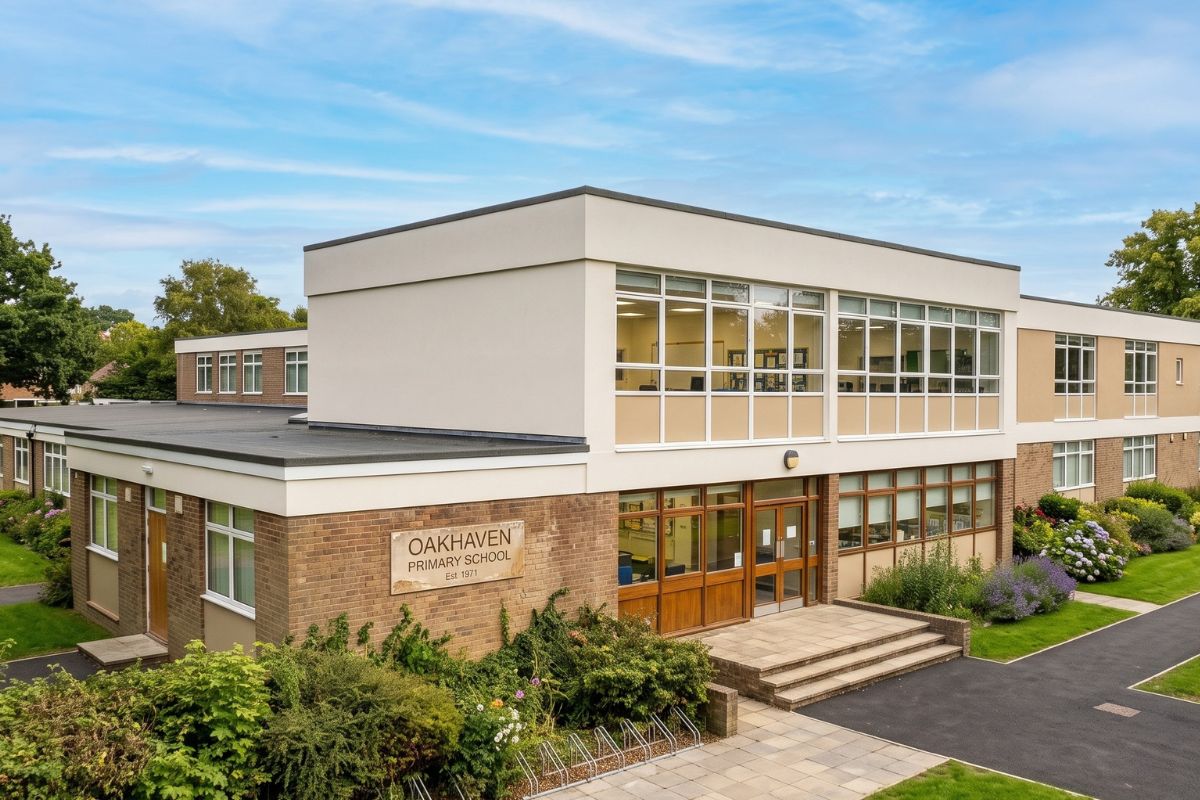
The school summer holidays provide an important window for inspections and remedial work on education buildings affected by reinforced autoclaved aerated concrete (RAAC), according to Property Inspect.
Its analysis found that primary schools accounted for approximately half of the education settings in England confirmed to contain the material.
Government data initially identified 234 affected settings, including 117 primary and 91 secondary schools. The Department for Education closed its identification programme in October 2024 with a final total of 237 schools and colleges.
The East of England had the greatest concentration, accounting for an estimated 38% of affected establishments, followed by the South East at 14.1%, London at 12.8% and the North West at 11.1%.
REMEDIATION FUNDING
Attention has moved from identifying RAAC towards its permanent removal, rebuilding affected premises and evidencing how remaining risks are being managed.
By September 2025, more than half of affected schools and colleges were either free from RAAC or progressing towards its removal. The latest figures cited by Property Inspect indicate that it has now been removed from 62 settings, while 71 schools are being rebuilt through the School Rebuilding Programme.
The Government has reportedly spent £211m on mitigation and remediation, including surveys, temporary accommodation, emergency safety measures and rebuilding projects.
For specialist property finance professionals, the programme illustrates the importance of establishing building condition, the scope of required works and responsibility for meeting associated costs before funding is agreed.
Short-term funding could potentially support appropriate remediation or redevelopment projects outside the state-funded programme.
However, lenders would require suitable structural reports, a credible schedule of works, experienced contractors and a clearly costed exit strategy.
EVIDENCING THE RISK

Sián Hemming-Metcalfe, Operations Director at Property Inspect, says: “The RAAC crisis has shown that identifying a building defect is only the beginning. The real test is whether those responsible for an estate can show that the risk has been assessed, controlled, monitored and resolved.
“As schools move from emergency measures into long-term remediation, responsible bodies need an accurate and current picture of their buildings. They should be able to see where risks remain, what temporary measures are in place, when those measures were last reviewed and who is responsible for the next action.”
She says inspection findings, structural advice, photographs, approvals, repairs and proof of completion should form a clear and traceable record.
That evidence will also be important to valuers, lenders and investors assessing education buildings for refinancing, redevelopment or alternative use.
Hemming-Metcalfe adds: “Knowing that work has been completed is important. Being able to evidence what was identified, what was decided and how the risk was closed is what creates lasting confidence.”