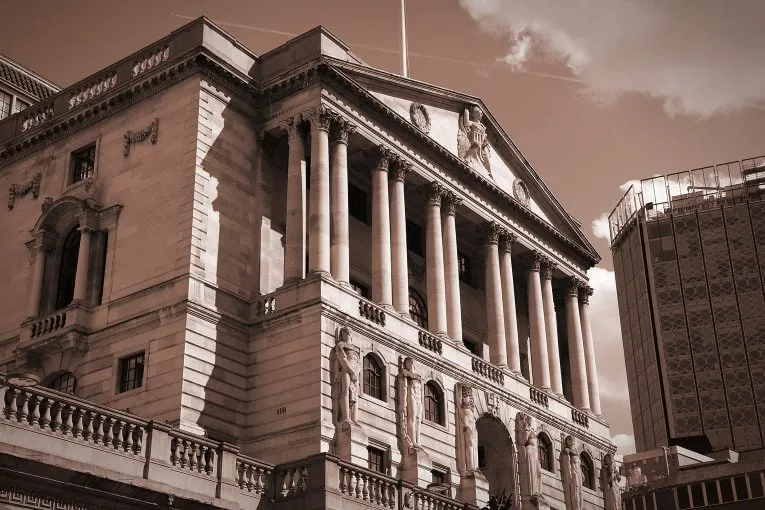
The Bank of England has held Bank Rate at 3.75% as rising energy prices add to inflationary pressure and leave lenders and borrowers facing a more uncertain funding environment.
The Monetary Policy Committee voted by six members to three to leave rates unchanged at its meeting ending on 16 September, with the minority favouring a 25 bps increase to 4%.
The decision comes after inflation rose to 3.1%, with the Bank expecting a further increase as disruption to energy supplies and transportation caused by the Middle East conflict feeds through into fuel, utility and business costs.
While there is so far little evidence of significant secondary effects on wages and prices, the Bank says the risk of more persistent inflation increases the longer higher energy costs remain in place.
It also points to higher mortgage rates and borrowing costs for businesses since the conflict began, alongside a softer labour market, as factors currently helping to restrain demand and wage pressure.
Andrew Bailey, governor of the Bank of England, says: “Today, we’ve held Bank Rate at 3.75%. So far, higher global energy costs have had a limited effect on price and wage setting in the UK.
“But the longer this volatility persists, the bigger the impact it will have on inflation, and the more likely it is we will need to raise Bank Rate to ensure that inflation falls back to our 2% target.”
FUNDING MARKETS MOVE AHEAD OF MPC
For specialist lenders, the Bank Rate hold does not necessarily mean borrowing costs will remain unchanged, with wholesale markets continuing to respond to expectations about inflation and the future path of monetary policy.
Richard Pike, sales and marketing director at Phoebus Software, says: “A decision by the Bank of England to hold the base rate was widely expected, even though inflation remains stubbornly above its 2% target.
“However, the path beyond this meeting is becoming much harder to read. The sharp rise in oil prices over recent weeks is another potential source of upward pressure as we head into autumn.
“The question for the Bank will be whether those external pressures become embedded in the wider inflation picture. There are some encouraging signs domestically, with wage growth and services inflation easing, but if higher energy and fuel costs begin feeding through into other prices, the MPC may have to keep rates higher for longer than was expected earlier in the summer.
“The mortgage market has already started pricing this in and the future direction of rates will depend on how the Bank assesses the balance between cooling domestic pressures and a much more uncertain inflation outlook.”
Martin Sims, distribution director at Molo, says: “A hold probably makes perfect sense when you look at everything the Bank is dealing with right now. Higher oil and energy costs are adding to inflation concerns, but there are signs of cooling in the labour market at the same time.
“Put those things together and there is a reasonable case for the Bank to wait for more evidence rather than make a move now.
“But Bank Rate can stand still while the cost of borrowing moves around it. Funding markets have been volatile and expectations for where rates go next have moved considerably. That difference is important because mortgage pricing is looking ahead rather than simply waiting for the MPC to move Bank Rate.
“For landlords, there is always a temptation to wait for the next meeting in the hope that finance becomes cheaper. The problem is that you could wait for Bank Rate to fall and find mortgage markets have already priced much of that expectation in.
“The landlords we’re seeing are getting on with the job instead – looking at purchases, reviewing existing borrowing and working with their brokers to decide what makes sense for their portfolio today.
“That’s where I think lenders have a responsibility. At Molo, we’re hopeful rather than optimistic that funding markets will start to settle down, but whatever happens next, we’re an intermediated lender and we are there for the broker and their client.
“That means helping brokers retain an existing client by supporting a refinance or finding a route for the next purchase. We want the broker to remain at the centre of that relationship.”
SAVERS AND INFLATION
Alex Beavis, interim director of banking at LHV Bank, says: “The Bank of England has resisted the pressure to increase base rate, against a backdrop of an expected increase in inflation, and that presents a challenge for savers who want to improve their ability to cope with any increase in outgoings.
“Our recent research found that the majority of savers with emergency money set aside (57%) would struggle to cover up to three months of essential costs, suggesting they could be exposed should they lose their income or face a major repair bill.
“Being diligent in setting money aside can only be the start. If you are an Active Saver, devoting a little time every couple of months to checking the interest rate on your savings, and moving if necessary to an account paying an inflation-beating rate, you’ll be better prepared to deal with any unexpected expenses that emerge.”
SURPRISING
Joshua Elash, founding director of specialist lender MT Finance, says: “The fact that the base rate has been held at 3.75% in the wake of inflation rising in August is surprising.
“While we weren’t relishing the idea of a base rate rise, the MPC needs to get a handle on inflation as we move into autumn. This doesn’t seem to be happening. All eyes will now be on the Chancellor’s first Budget in October.”
THE RIGHT DECISION
Duncan Kreeger, CEO of commercial mortgage and bridging specialist TAB, adds: “The Bank of England was right to keep interest rates unchanged for the sixth month in a row – despite growing fears of an inflationary upsurge as oil prices climb.
“Leaving borrowing costs at 3.75% was the sensible option. Yes, higher energy prices could push inflation towards 4% this winter but we can’t ignore the state of the labour market – the number of people in payrolled employment fell by 26,000 in August – the Bank shouldn’t be hiking rates just because of higher oil prices.
“And the MPC doesn’t need to raise the base rate. The increase in government bond yields, which move inversely to prices, will naturally cool the UK economy and put downward pressure on inflation. This was the right decision.”