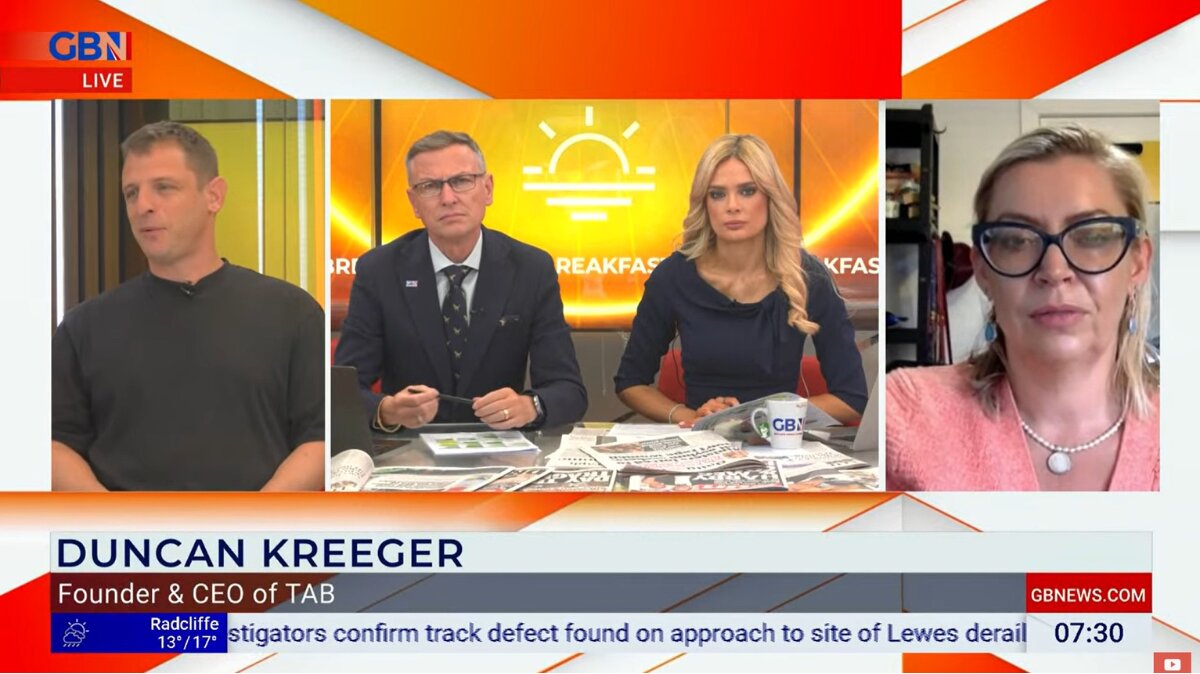
I was on breakfast TV recently debating whether workers who abuse sick leave should be sacked.
Yes.
We have a real problem with this in the UK. We are the only G7 economy where sick days remain above pre-pandemic levels.
Across the country, Monday accounts for 37% of new sickness absence. That screams duvet day. At TAB, Monday accounts for 23%.
Commercial mortgage lenders, bridging specialists, estate agents or any other employer need to be able to fire people who abuse sick leave.
“A sickie is not an innocent jape. It is not a victimless crime.”
A sickie is not an innocent jape. It is not a victimless crime. It damages productivity. The work still needs to get done. Someone still needs to pick up the workload. That usually means colleagues who already have full workloads take on more.
Government figures show 5.4 million UK businesses are micro businesses (with between zero and nine employees) – 95% of the total.
In a business with 10 people, one person taking an unjustified sick day represents a 10% loss of available workforce that day.
While TAB doesn’t sit in this category – we already have over 50 full-time employees – my point stands; you can’t bring momentum to lending if you are not operating at close to 100%.
You can’t offer commercial mortgages at bridging speed if you are short-staffed.
And you cannot build a high-performing business when people can simply decide not to turn up.
“There is another problem. It is unfair.”
There is another problem. It is unfair. Reliable employees turn up consistently. When a colleague routinely abuses sick leave, those reliable people pick up the slack. That creates resentment. It damages morale.
It also makes workforce planning harder. You can plan for holidays. You know when people are away. You can manage workloads, allocate resources and make sure deadlines are met. You cannot plan around random sickies.
Then there is the cultural impact. Sickies are contagious. Not clinically. Culturally. If people see colleagues taking sick days without consequences, they learn that attendance is optional. That is the wrong message.
There is, obviously, a clear distinction between genuine illness and abuse. If someone is genuinely unwell, support them.
But employers are entitled to manage persistent or suspicious absence fairly, consistently and in accordance with their absence and disciplinary policies.
If someone repeatedly abuses sick leave, manage them out of the organisation. Because taking a sick day when you are not sick is the same as theft.
But there is another side to this.
“You need people who want to join your organisation and stay there.”
You need to attract great people as well as remove poor performers. Whether you are a broker, lender, packager, or estate agent, you need people who want to join your organisation and stay there. You need good benefits, certainly. But you also need to treat people as individuals.
That creates a tension for employers.
I am a huge believer in the office and TAB is office-first. We want people in the office, learning from each other and feeding off each other’s energy. There is a reason fully remote work in the UK has declined since 2022 (according to the latest Randstad Employer Brand Research). The office works.
But treating people as individuals also means giving them flexibility where it makes sense.
Flexibility ranks as an important job factor for 80% of workers in the UK.
So, we accommodate it. Our head of investor relations lives in the Isle of Man and comes into the office for a week every couple of weeks. Our senior BDM for Scotland, Kris Day, lives in Glasgow. Others have an agreement to start later and work later – or vice versa.
“You need to give them an office worth coming to.”
But if you want people to work office-first, you need to give them an office worth coming to.
You need to pull them towards HQ. The office needs to be light and airy.
It needs to stay cool in the heat. People need space to breathe. They need somewhere to grab lunch, not to be stuck in the middle of nowhere.
And your workplace needs to be somewhere people actually want to spend time; only 3% of workers say they don’t care about workplace comfort.
Get the balance right and most people will turn up and perform.
Give people the work-life balance they value.
Give them flexibility where it makes sense.
Give them a workplace they actually want to use.
Then hold everyone to the same standard.
Because the minority who abuse sick leave undermine everyone else.
They need to be managed out.