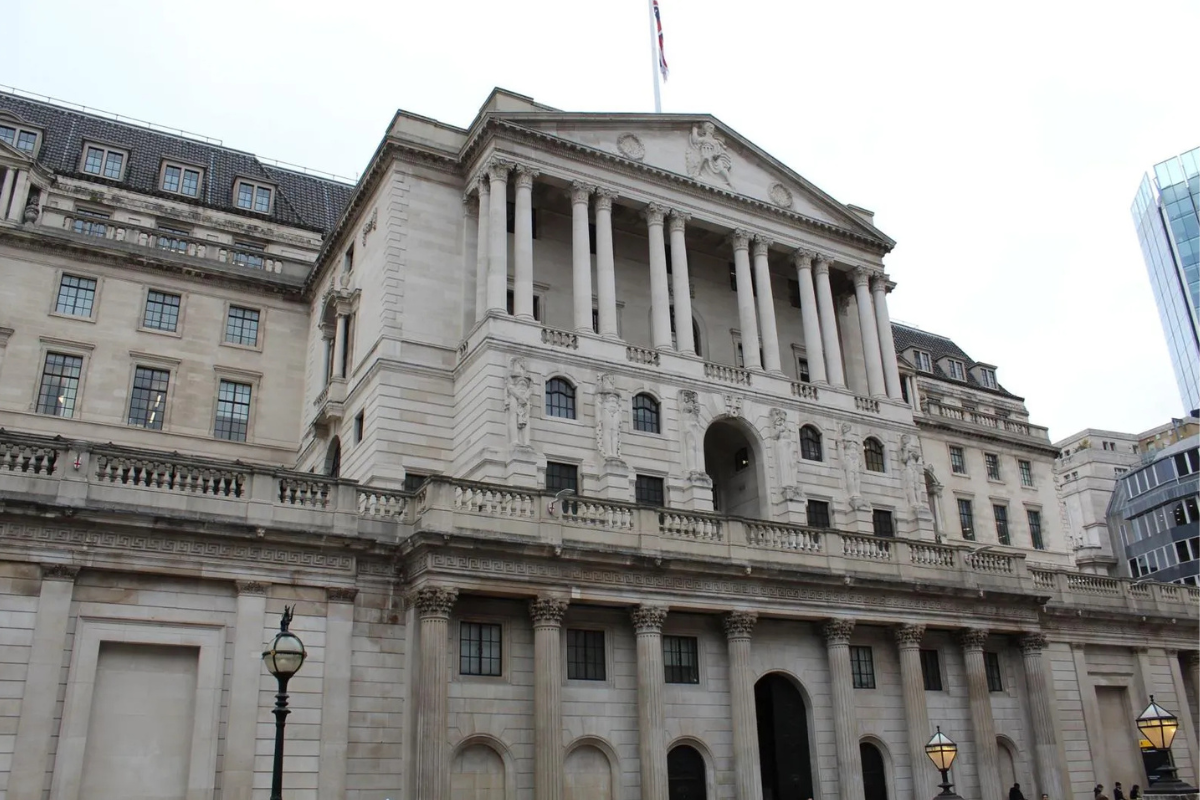
The Bank of England has held Bank Rate at 3.75%, opting for stability despite inflation remaining above its 2% target and ongoing uncertainty surrounding the global economy.
The Monetary Policy Committee voted by a margin of seven to two to leave rates unchanged, with two members favouring a 0.25% increase to 4%.
The decision comes after the latest inflation data showed Consumer Prices Index inflation remained at 2.8% in May, unchanged from April and below market expectations.
While inflation remains above target, easing food prices and lower energy costs helped offset increases elsewhere in the economy. Markets have also responded positively to the recent US-Iran peace agreement, which has eased concerns around disruption to energy supplies and reduced fears of a prolonged inflation shock driven by higher oil prices.
INFLATIONARY PRESSURE
Bank of England Governor Andrew Bailey said: “Oil prices have fallen in recent days, and that’s encouraging.
“Whatever happens in the future, the higher energy prices of the past four months mean there’s already some inflationary pressure in the pipeline.
“The Bank’s job is to make sure that doesn’t turn into sustained inflation above our 2% target.”
The decision provides a degree of certainty following several months of volatility across swap markets and funding costs.
INDUSTRY REACTION

Karen Rodrigues, director of sales at TAB, said: “This was absolutely the right call,” she said. “Borrowers and brokers need stability right now, and a hold gives the market room to breathe.
“Our focus is on building momentum in lending, and that becomes very difficult when rate uncertainty is hanging over the market. Businesses are already navigating a challenging environment, and the labour market has cooled considerably.
“This is not the time to add further pressure. The committee made the right decision, and we hope it gives both lenders and borrowers the confidence to keep moving forward.”
RIGHT THING TO DO

Joshua Elash, founding director of specialist lender MT Finance, says: “It is encouraging that the MPC has held base rate. This was the right thing to do.
“To increase it at this point could have put further strain on both lenders and borrowers.
“With a framework for peace in place between Iran and the US, we should see some stability return to the mortgage market, as well as an easing in tensions around energy costs.”
IMPROVED BACKDROP

Adam Bovingdon, managing director – real estate finance – United Trust Bank, said: “As expected, the Bank of England held Bank Rate at 3.75% today.
“The decision comes on the back of encouraging economic data this week, with inflation holding at 2.8%, below expectations of 3.0%, and unemployment edging down to 4.9%, suggesting the economy remains relatively resilient despite global uncertainty.
“For housebuilders, developers and property investors, today’s decision provides stability at a time when confidence is much needed.
“While challenges around viability, affordability and planning remain, easing inflation helps support expectations that interest rates will gradually reduce over time, providing an improved backdrop for development and investment activity.”
TURNING POINT

Scott Clay, director at Together, said: “Today’s rate hold from the Bank of England may signal a turning point for the property market, with the announcement of an end to the war in the Middle East lessening the chances of steeply-rising inflation in the near-term.
“We’ve also seen swap rates dip in the past couple of weeks, and lenders’ pricing is expected to follow suit, providing greater affordability for home buyers and movers and leading to increased movement in the housing market.
“This could provide some impetus for mortgage borrowers to move ahead with their property plans ahead of any possible future price rises.”
While inflation remains above target and policymakers continue to monitor energy markets closely, today’s decision is likely to be viewed as a welcome pause, providing greater certainty for developers, investors and lenders at a time when confidence remains fragile.
PREDICTABLE DECISION

Nick Smith, CEO of Reward Funding, says: “The decision to once again hold the Bank of England base rate at 3.75% comes as little surprise and closely reflects what we are hearing across the wider market.
“Ahead of the announcement, our latest broker survey found that 86% expected rates to remain unchanged, with just 7% predicting an increase and 7% a decrease. It’s very clear that the market was expecting continuity over change.
“It’s important to note that the decision to hold the base rate should not be confused with stability.
“The rates remaining unchanged may provide some short-term certainty, but SMEs are still operating in a volatile environment that is defined by rising costs and geopolitical uncertainty.
“For many businesses, the challenge is no longer simply the cost of borrowing but having the confidence and flexibility to act when opportunities arise.
“SMEs are not going to sit around and wait for optimal conditions. Opportunities will still appear and decisions need to be made.
“Speed, flexibility and access to the right funding make all the difference, and this is where we step in. We act fast, back ambition and help SMEs move forward when others hesitate.”
STRUCTURAL SHIFT

Ryan McGrath, director of second charge mortgages at Pepper Money, said: “Today’s hold reflects the difficult position the Bank of England finds itself in. With global economic uncertainty still very much in the picture, the MPC is clearly not ready to commit to a cut just yet.
“For homeowners, the reality of this prolonged higher-rate environment is already showing up in borrowing behaviour.
“Consumer demand for second charge mortgages remains strong, and that’s not a coincidence.
“More people are choosing to raise funds against their home without touching their existing mortgage, because disturbing a competitive fixed rate to access extra capital simply doesn’t make financial sense for many of them right now.
“What we’re seeing in the market points to a structural shift, not just a short-term trend.
“Demand for loans continues to hold up well even as criteria tightens and affordability gets squeezed.
“Until rate cuts become a consistent reality, the second charge market will remain a practical, mainstream route for borrowers looking to manage their finances sensibly.”