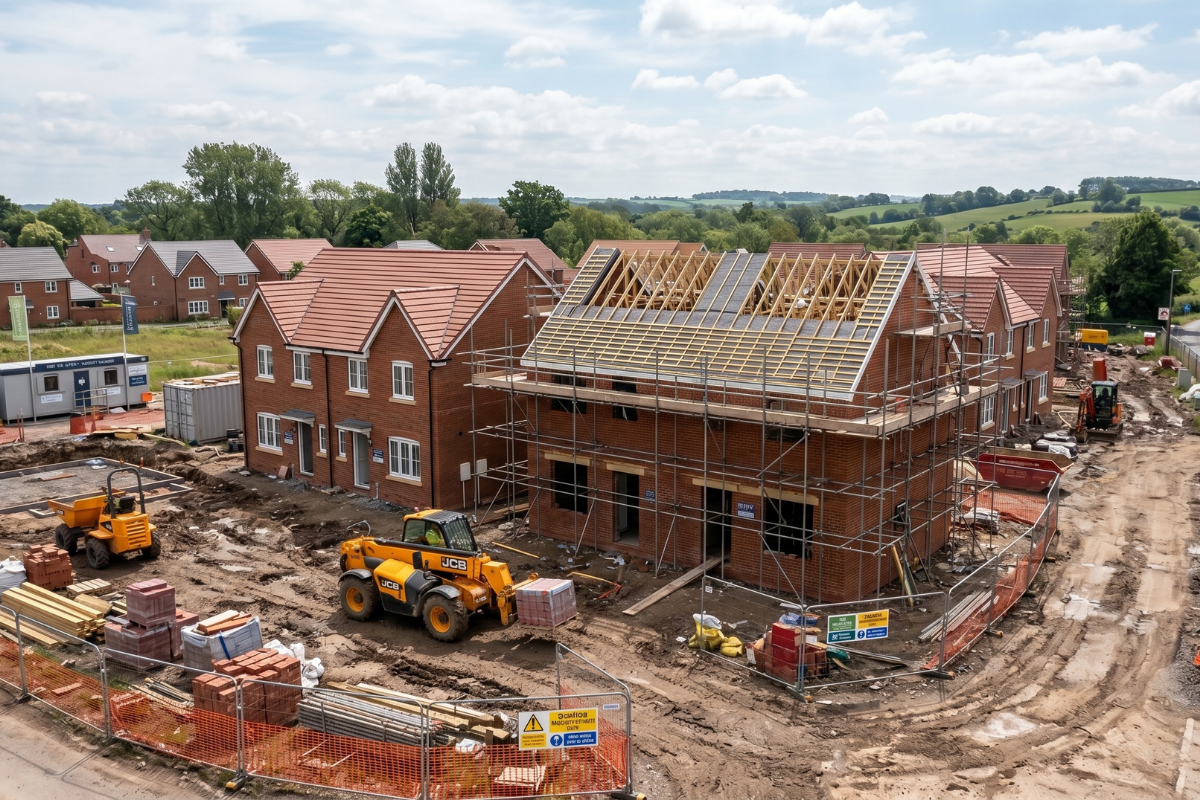
The UK construction sector remained under pressure in June, although the pace of decline eased slightly as new orders stabilised and cost pressures softened.
The latest S&P Global Market Intelligence UK Construction PMI rose to 38.4 in June from 38.2 in May.
While still well below the 50 mark separating growth from contraction, it points to a marginally less severe downturn following May’s six-year low.
Commercial construction proved the most resilient part of the market, with its activity index rising to 41.5, while housebuilding remained the weakest-performing sector.
Residential construction slipped to 35.9, marking its sharpest contraction of 2026 so far, as higher borrowing costs, subdued housing demand and wider economic uncertainty continued to weigh on activity.
Civil engineering also deteriorated, falling to 22.1, its weakest reading since April 2020.
Construction firms reported another fall in new business during June, although the decline was the slowest since March.
WEAK DEMAND
Survey respondents cited weak house sales, subdued business investment and intense competition for projects, although some highlighted improving opportunities within the defence and energy sectors.
Employment also continued to decline, extending an 18-month period of job losses across the industry.
Demand for subcontractors fell sharply, while easing demand for construction materials helped improve supply chains and slow input cost inflation to its lowest level in three months.
Tim Moore, economics director at S&P Global Market Intelligence, said: “The downturn in UK construction output lost some intensity in June amid a softer reduction in commercial building work.
“House building and civil engineering activity nonetheless registered sharper declines than in May, with the latter seeing its weakest performance since the start of the pandemic.
“New work decreased to the least marked extent since March, despite widespread reports of challenging market conditions.
SUBDUED HOUSING SALES
He added: “Construction companies commented on headwinds from subdued housing sales, elevated interest rates and squeezed consumer finances, alongside cutbacks to business investment plans.
“Some firms noted delays with infrastructure work and fewer public sector tender opportunities, but energy markets were cited as an area of positivity.”
Moore said that while supply chain challenges appear to have receded, with vendor delivery times lengthening to the smallest degree since March.
He added: “June data indicated a recovery in business activity expectations across the construction sector since May, although confidence levels remain well short of historic trends.
“A number of survey respondents suggested recent new contract awards and an expected improvement in broader market conditions had underpinned optimism.”
SIGNIFICANT IMPLICATIONS FOR HOUSING MARKET
Richard Pike, sales and marketing director at Phoebus Software, said; “Subdued buyer demand, elevated borrowing costs, and wider economic uncertainty are continuing to weigh heavily on the market.
“Fewer new-build sales are feeding through into delayed project starts, while intense competition for new work is making it increasingly difficult for firms to maintain momentum.
“The fact that construction companies have now been cutting jobs for 18 consecutive months underlines the scale of the pressures facing the industry.
“The implications for the housing market are significant.
“At a time when the Government is seeking to increase housing supply and improve affordability, the continued contraction in housebuilding risks further restricting the flow of new homes coming to market.
“That will do little to ease long-term supply shortages and could prolong affordability challenges for would-be buyers.”