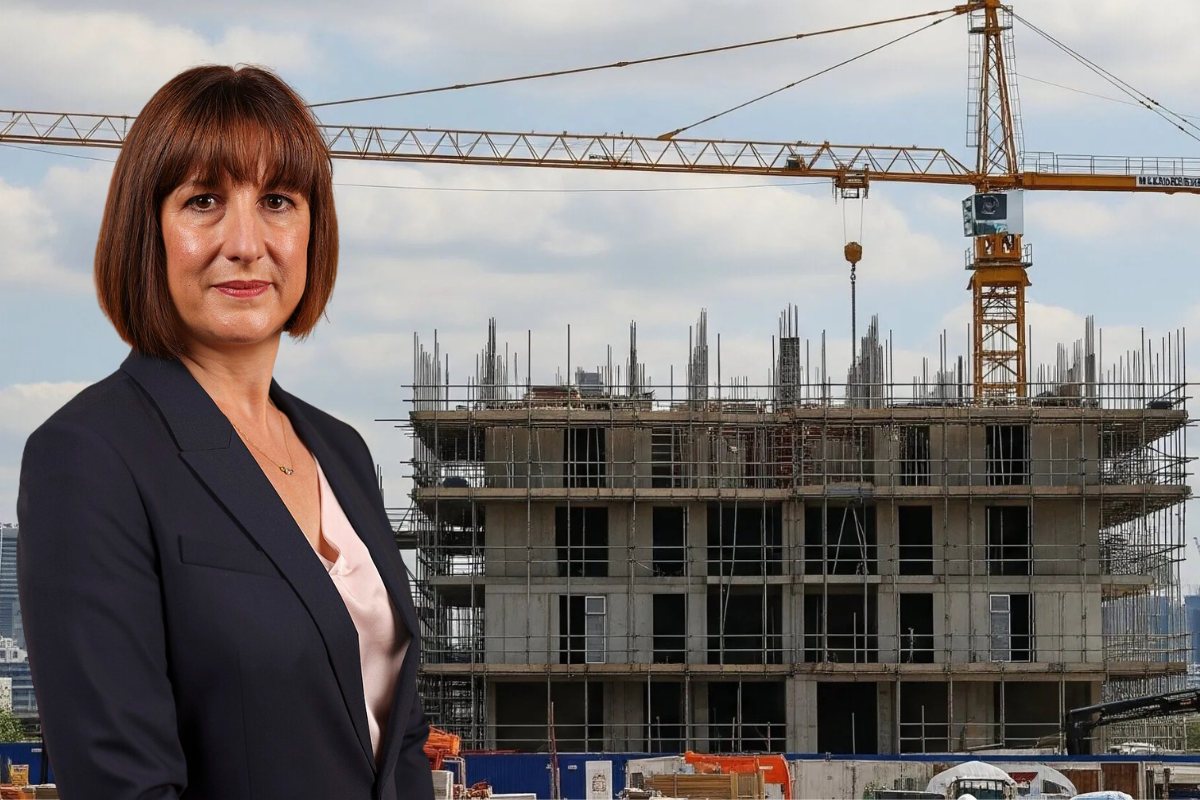
Small and medium-sized businesses and developers have expressed disappointment following the Chancellor’s Spring Statement warning that the update offered little to unlock growth or stimulate activity across the economy and property sector.
Rachel Reeves (main picture inset) told MPs yesterday that the government was focused on delivering “economic security in an uncertain world” as she delivered a low-key statement against a backdrop of rising energy prices and global instability.
The announcement came as escalating tensions in the Middle East pushed energy prices sharply higher, with Brent crude rising more than 7% and gas prices jumping around 23%. Reeves said she remained in close contact with Andrew Bailey while monitoring the situation.
Updated forecasts from the Office for Budget Responsibility show the UK economy is now expected to grow by 1.1% in 2026, down from a previous estimate of 1.4%, following weaker-than-expected economic data at the end of 2025. Unemployment is also expected to rise to 5.3% this year.
LITTLE TO BOOST CONFIDENCE
While Reeves argued that “inflation is down, borrowing is down, living standards are up and the economy is growing”, business leaders say the absence of new measures will do little to boost confidence.

Derek Ryan, CEO of North West Europe at Bibby Financial Services, says many SMEs had been hoping the statement would release pent-up investment.
He adds: “The Chancellor’s Spring Statement is unlikely to shift the dial for SMEs that were hoping for fresh measures to unlock growth.
“With 46% of firms delaying major investment decisions until after today’s announcement, this was an important moment to unlock pent-up investment – even if the Government’s focus for today is on stability, rather than new fiscal intervention,” he said.
Ryan also warns that high operating costs and tax pressures are still weighing on smaller firms.
He says: “Many small business leaders will still be grappling with the high costs of doing business and the elevated tax burden, both of which continue to weigh on hiring and investment decisions. Today’s absence of targeted SME measures may mean that uncertainty lingers, doing very little for business confidence.”
HOUSING DELIVERY WILL SLOW
The statement also drew a cautious response from the development and housebuilding sector.
 Lawrence Turner, director at Boyer, part of property group LRG, says the forecasts confirm that housing delivery will slow before recovering later in the decade.
He adds: “The Spring Statement quietly admits something the housebuilding industry already knows: there will be a slowdown before things get better.”
Turner points to OBR projections suggesting housing delivery will fall to around 220,000 homes in 2026-27 before recovering to just over 305,000 by the end of the decade.
He says: “This demonstrates that last year’s planning reforms won’t have an instant impact. Translating these reforms into new local plans, permissions, and homes on the ground takes time,”
Planning reform alone will not solve the supply challenge.
He says: “Developers can only build at the pace homes can be sold. Transactions rose by nearly 11% in 2025 to 1.2 million, which is encouraging, but house price growth is expected to remain fairly modest.”
Turner also highlights pressure on local authorities tasked with delivering planning reform.
“Local authority borrowing has risen sharply in recent years, highlighting the financial pressure councils are under.
“Those same councils are expected to process planning applications faster and update their Local Plans more quickly. Reform on paper is one thing, delivering it at local level is another.”