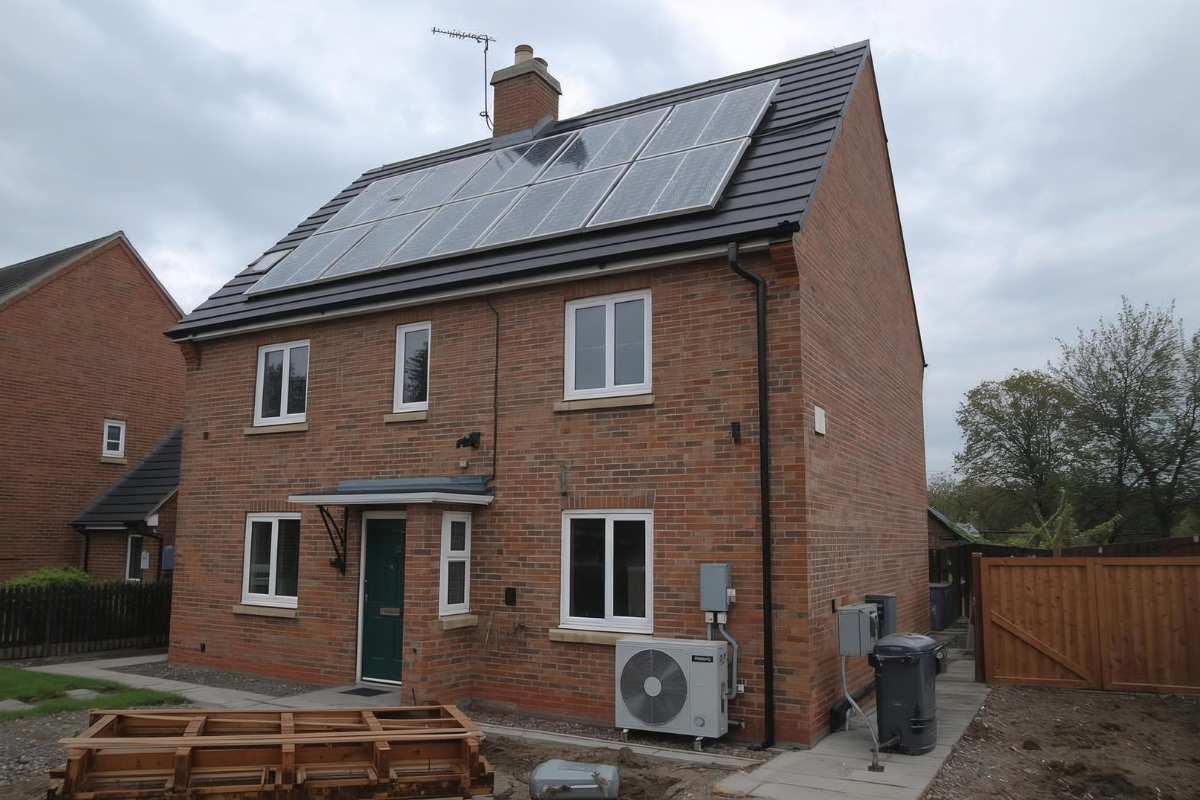
Developers could face higher build costs and new delivery pressures after the Government confirmed tougher building standards that will force most new homes in England to include solar panels and low-carbon heating systems.
The changes, introduced under the Future Homes Standard, will require new properties to be built without gas boilers from 2028 and instead rely on heat pumps, heat networks and on-site renewable power – a shift expected to increase upfront development costs across residential schemes.
Under the new rules, solar panels will need to cover an area equivalent to around 40% of a home’s ground floor footprint in most cases, raising concerns within the development and short-term lending sectors about viability, site constraints and potential delays to projects.
The announcement comes at a time when construction output remains under pressure and the Government is already struggling to hit its target of delivering 1.5 million homes by the end of the decade, with funding, planning and build costs continuing to weigh on new schemes.
PLUG-IN SOLAR
Alongside the changes for new-build homes, ministers also confirmed plans to allow so-called “plug-in” solar panels to be sold in UK shops within months, in a move designed to accelerate the shift to domestic energy generation and reduce reliance on imported fuel following renewed geopolitical tensions in the Middle East.
The measures are part of a wider push to strengthen energy security and cut long-term bills, but developers and lenders warn that tighter regulations risk adding further strain to project viability, particularly on marginal sites where development finance is already under pressure.

Energy Secretary Ed Miliband says: “The Iran War has once again shown our drive for clean power is essential for our energy security so we can escape the grip of fossil fuel markets we don’t control.
“Whether through solar panels fitted as standard on new homes or making it possible for people to purchase plug-in solar in shops, we are determined to roll out clean power so we can give our country energy sovereignty.”

Housing Secretary Steve Reed adds: “Building 1.5 million new homes also means building high-quality homes that are cheaper to run and warmer to live in.
“As we make the switch to clean, homegrown energy, today’s standard is what the future of housing can and should look like.
“Not only will these changes protect hardworking families from shocks abroad but will also slash hundreds of pounds off their energy bills every year.”
INCREASED DEMAND
Industry figures have warned the new requirements could add around £10,000 per unit to build costs, creating additional pressure on development finance structures and potentially increasing demand for bridging and short-term funding as schemes require larger facilities to get through planning, construction and exit.
With build costs, compliance rules and borrowing rates all remaining elevated, lenders say the latest changes highlight the need for flexible funding solutions as developers adapt to a more complex and expensive delivery environment.