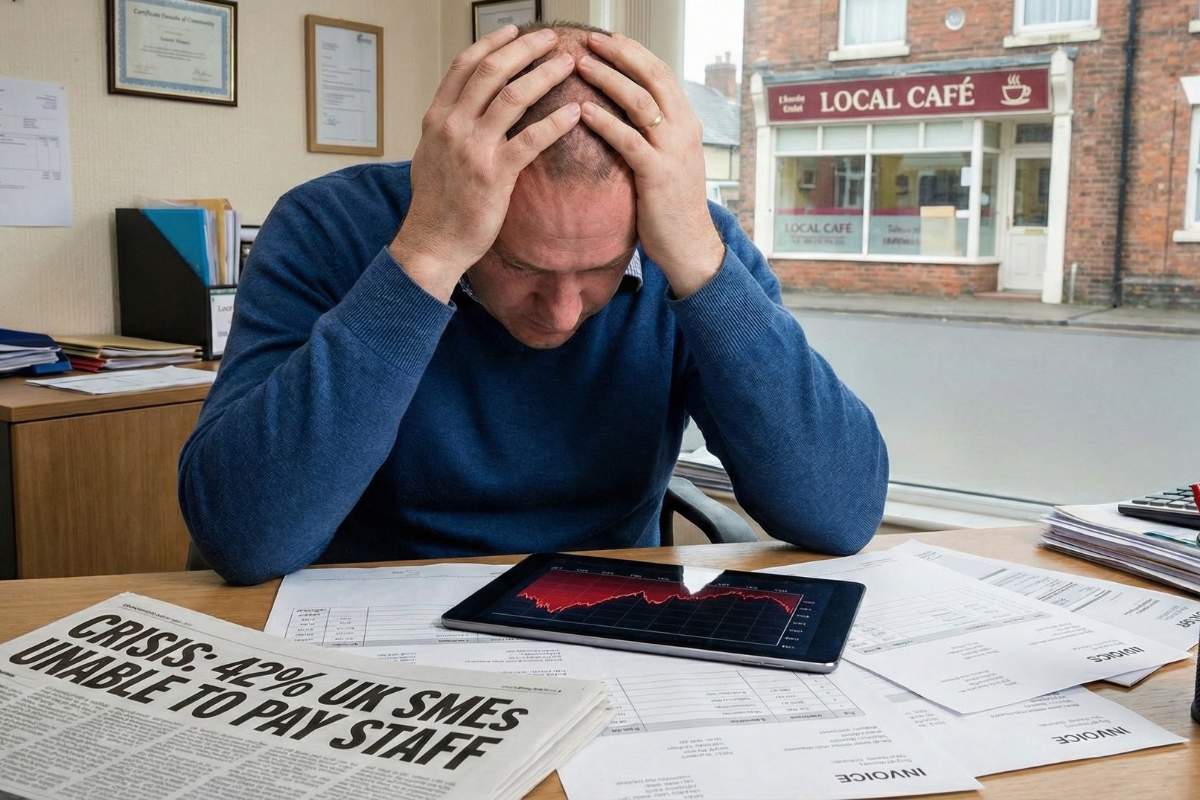
Late payments are pushing thousands of UK SMEs to the brink with more than two in five unable to pay staff on time over the past year according to new research.
A study of 1,000 SME owners and decision makers by Bibby Financial Services (BFS) found that 42% had been prevented from meeting payroll deadlines due to customers paying late. Almost a quarter (24%) have paused hiring as cashflow pressures intensify.
The figures point to mounting liquidity strain across the small business sector – a key driver of demand for bridging, invoice finance and short-term working capital solutions.
BFS’s latest SME Confidence Tracker shows firms are now owed an average of £66,770 in unpaid invoices, a 10% rise since Q1 2025.
Meanwhile, 62% say customers are taking longer to settle invoices than a year ago, and 41% have been forced to dip into emergency funds to stay afloat.
IMPOSSIBLE CHOICES

Derek Ryan, CEO for North West Europe at Bibby Financial Services, says: “With economic growth already faltering, late payments are a significant threat to the survival of SMEs across the country, applying pressure to businesses already battling high operating costs.
“When firms are forced to make impossible choices – between hiring and surviving, dipping into emergency funds or struggling to pay staff on time – it’s a clear sign the Government needs to step in.”
POLITICAL PRESSURE
The Business and Trade Committee’s recent small business strategy report has called for action to tackle the late payment crisis, while BFS’s data suggests conditions are deteriorating rather than improving.
Ahead of the Chancellor’s Spring Statement, more than two-thirds (69%) of SMEs say there should be serious consequences for companies that repeatedly pay late. Over a quarter (27%) want specific legislation introduced to protect smaller firms.

Tim Gelardi, Director of Systems & Compliance at FORT Builders’ Merchant, says: “We are seeing more customers struggling to pay in line with terms, often because they’re facing late payments themselves or failing to secure the margins they expected when bidding for work.
“Operational and raw material costs are also unpredictable. If prices spike, there’s no guarantee that our customers have factored that into their budgets.”
TIME WASTING
He adds: “There are several knock-on effects. Late payments force us to waste time chasing customers and require us to implement more official collection procedures which can damage relationships.
“The situation has meant that we’ve shortened our timescales on customer terms, curtailing supplies earlier – just to get our name in the hat when customers decide who to pay first. At the end of the day, we’re a builders’ merchant, not a bank.”
Ryan adds: “Late payments are draining confidence from small businesses and holding back growth. While the Government laid the groundwork for change to the payments framework in last year’s consultation, SMEs are desperate for action, and many are turning to alternative finance for the support they need.
“If the Government is serious about kickstarting the economy, it must back SMEs with policies that provide certainty that enables businesses to invest in their people, products and services.”